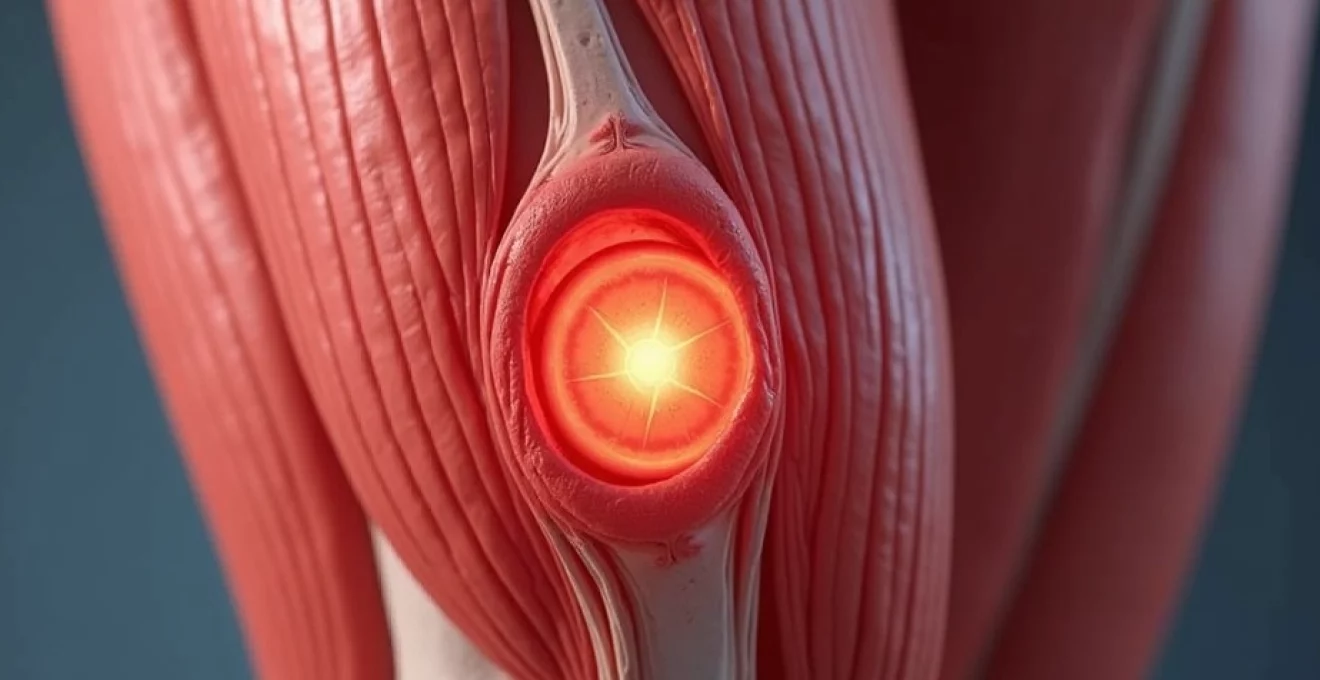
Discovering an unexpected indentation or depression in your thigh muscle can be concerning and puzzling. These visible depressions, ranging from subtle dimples to more pronounced hollows, may develop suddenly or gradually over time. While some causes are benign and temporary, others may indicate underlying muscle damage, atrophy, or pathological conditions requiring medical attention. Understanding the various factors that can lead to thigh muscle indentations helps differentiate between normal anatomical variations and conditions warranting professional evaluation.
Anatomical understanding of thigh muscle indentations and depressions
The human thigh contains the body’s largest and most powerful muscle groups, making it susceptible to various forms of visible changes when normal structure is disrupted. These muscles work in complex coordination to facilitate movement, and any alteration in their architecture can manifest as surface irregularities or depressions.
Quadriceps femoris complex: rectus femoris, vastus lateralis, and vastus medialis architecture
The quadriceps femoris comprises four distinct muscles that form the anterior thigh compartment. The rectus femoris, positioned centrally, originates from the anterior inferior iliac spine and extends down the thigh’s front surface. When this muscle experiences trauma or undergoes atrophy, the resulting depression often appears as a longitudinal groove running down the thigh’s anterior aspect. The vastus lateralis, the largest quadriceps component, forms the thigh’s outer contour, whilst the vastus medialis creates the characteristic teardrop shape above the knee.
Disruption to any of these muscles can create distinct surface irregularities. Muscle fibre disruption in the vastus lateralis often presents as lateral thigh depressions, particularly noticeable when the muscle contracts. These architectural changes may result from direct trauma, overuse injuries, or neurological conditions affecting muscle innervation.
Hamstring group morphology: biceps femoris, semitendinosus, and semimembranosus structure
The posterior thigh compartment houses the hamstring muscle group, consisting of three primary muscles with distinct anatomical characteristics. The biceps femoris, with its long and short heads, creates the lateral hamstring bulk, while the semitendinosus and semimembranosus form the medial hamstring mass. These muscles are particularly prone to strain injuries due to their biarticular nature, crossing both hip and knee joints.
Hamstring injuries frequently result in visible muscle depressions, especially in the biceps femoris region. Scar tissue formation following grade II or III strains can create permanent indentations where normal muscle bulk once existed. The semitendinosus, being more superficial in the distal thigh, often shows clear surface changes when injured or atrophied.
Fascial compartments and intermuscular septae in thigh topology
The thigh’s fascial compartments play a crucial role in maintaining muscle shape and preventing excessive swelling during injury. The anterior, posterior, and medial compartments are separated by thick fascial layers that can influence how muscle damage manifests on the surface. When compartment syndrome occurs, these fascial boundaries can create characteristic patterns of muscle depression following resolution of acute swelling.
Intermuscular septae create natural divisions between muscle groups, and these anatomical landmarks often coincide with areas where muscle indentations become most apparent. Understanding these fascial relationships helps explain why certain injuries produce specific patterns of surface irregularities.
Neurovascular bundle positioning and surface anatomy landmarks
The femoral neurovascular bundle travels down the thigh’s medial aspect, creating natural anatomical grooves that can become more pronounced with muscle atrophy or weight loss. The adductor canal, housing the superficial femoral artery and saphenous nerve, forms a natural depression between the vastus medialis and adductor muscles. This normal anatomical feature can become more prominent in individuals with reduced muscle mass or following certain injuries.
Nerve injuries affecting the femoral or sciatic nerves can lead to denervation atrophy, creating characteristic patterns of muscle wasting and surface depressions. The resulting indentations often follow the distribution of the affected nerve’s motor branches, providing important diagnostic clues about the underlying pathology.
Traumatic injuries causing visible muscle depressions
Traumatic injuries represent one of the most common causes of thigh muscle depressions, with the severity and location of damage determining the extent of visible surface changes. These injuries can range from minor contusions to severe muscle tears requiring surgical intervention.
Contusion-related haematoma formation and subsequent muscle fibre disruption
Direct trauma to the thigh muscles often results in contusions that can lead to significant haematoma formation within the muscle belly. The quadriceps muscles, being superficial and large, are particularly susceptible to this type of injury during contact sports or accidents. When blood accumulates within the muscle tissue, it can disrupt normal fibre architecture and create areas of localised pressure and inflammation.
As the haematoma resolves, scar tissue formation may occur, leading to permanent changes in muscle contour. Myositis ossificans , a serious complication of severe muscle contusions, can result in bone formation within the muscle tissue, creating hard, palpable masses and associated surface depressions. This condition most commonly affects the quadriceps muscles and can cause significant functional impairment if not properly managed.
Grade II and III muscle strain sequelae: scar tissue formation and architectural changes
Muscle strains are classified into three grades based on the extent of fibre disruption, with higher grades more likely to result in permanent structural changes. Grade II strains involve partial muscle fibre tears, whilst grade III strains represent complete muscle rupture. Both can lead to visible muscle depressions as the healing process progresses and scar tissue forms.
The hamstring muscles are particularly prone to severe strains, especially in athletes involved in sprinting or jumping activities. When these injuries heal, the replacement of normal muscle tissue with fibrous scar tissue can create distinct hollows or indentations along the muscle belly. Muscle retraction following complete ruptures may also contribute to visible depressions, as the torn muscle ends separate and heal in a shortened position.
Compartment syndrome aftermath: muscle necrosis and volume loss
Acute compartment syndrome represents a surgical emergency that can have devastating consequences for muscle tissue if not promptly treated. The increased pressure within the fascial compartments compromises blood flow to the muscles, leading to ischaemia and potential necrosis. Following resolution of acute compartment syndrome, significant muscle volume loss often occurs, resulting in visible depressions and functional impairment.
Chronic exertional compartment syndrome, whilst less severe than the acute form, can also lead to muscle changes over time. Athletes experiencing repeated episodes may develop gradual muscle atrophy and associated surface irregularities. The anterior compartment of the thigh, containing the quadriceps muscles, is most commonly affected, leading to characteristic flattening or depression of the muscle contour.
Penetrating trauma: Laceration-Induced muscle defects and surgical repair outcomes
Penetrating injuries to the thigh, whether from accidents, surgical procedures, or violent trauma, can create immediate muscle defects that may persist despite repair attempts. The extent of visible depression depends on the amount of muscle tissue lost and the effectiveness of surgical reconstruction. Large muscle lacerations often require debridement of devitalised tissue, further contributing to volume loss and surface irregularities.
Surgical repair of penetrating muscle injuries aims to restore function whilst minimising cosmetic deformity. However, even successful repairs may result in some degree of surface irregularity due to scar tissue formation and altered muscle architecture. Fasciotomy scars from compartment syndrome treatment can also contribute to visible depressions along the thigh’s lateral or medial aspects.
Pathological conditions associated with thigh muscle atrophy
Various pathological conditions can lead to progressive muscle wasting and subsequent thigh depressions. These conditions range from localised nerve injuries to systemic diseases affecting muscle metabolism and structure. Understanding these pathological processes helps differentiate between traumatic and disease-related muscle changes.
Neurological conditions affecting the lumbar plexus or peripheral nerves can cause denervation atrophy of specific muscle groups. Femoral nerve injuries, often resulting from pelvic fractures or surgical complications, lead to quadriceps weakness and atrophy. The resulting muscle wasting creates characteristic depressions along the anterior thigh, particularly noticeable in the vastus medialis region. Poliomyelitis sequelae and other motor neurone diseases can cause similar patterns of muscle atrophy, though these typically develop more gradually.
Inflammatory myopathies, including polymyositis and dermatomyositis, can cause symmetric muscle wasting affecting the thigh muscles. These autoimmune conditions lead to chronic inflammation within the muscle tissue, resulting in fibre destruction and replacement with connective tissue. The progressive nature of these conditions often results in gradually increasing muscle depressions and functional impairment. Early recognition and treatment are crucial for preventing irreversible muscle damage.
Disuse atrophy represents another common cause of thigh muscle depressions, particularly following prolonged immobilisation or reduced activity levels. Patients confined to bed rest or those with lower limb immobilisation often develop significant quadriceps atrophy within weeks. The vastus medialis oblique is typically the first and most severely affected, creating a characteristic flattening of the medial thigh contour. This type of atrophy is generally reversible with appropriate rehabilitation, though complete recovery may take months.
Genetic muscle disorders, such as muscular dystrophy variants, can cause progressive muscle wasting patterns that include the thigh musculature. These conditions typically present with symmetric involvement and may be associated with other systemic features. Limb-girdle muscular dystrophy commonly affects the hip and thigh muscles, leading to characteristic patterns of weakness and atrophy that become increasingly apparent over time.
Diagnostic imaging modalities for thigh muscle abnormalities
Modern imaging techniques provide detailed visualisation of thigh muscle architecture, enabling precise diagnosis of conditions causing surface depressions. These modalities help differentiate between various pathological processes and guide appropriate treatment decisions.
Magnetic resonance imaging: T1-Weighted and STIR sequence interpretation
Magnetic resonance imaging represents the gold standard for evaluating muscle pathology, offering excellent soft tissue contrast and multiplanar imaging capabilities. T1-weighted sequences provide optimal visualisation of normal muscle architecture and can clearly demonstrate areas of muscle atrophy or replacement with fatty tissue. These sequences appear dark for normal muscle and bright for fat, making it easy to identify areas where muscle tissue has been lost or replaced.
Short tau inversion recovery (STIR) sequences are particularly valuable for detecting muscle oedema and inflammation. Active muscle injuries appear bright on STIR images, helping to differentiate acute from chronic changes. Chronic muscle tears often show characteristic patterns of fatty infiltration and scarring on T1-weighted images, whilst maintaining normal signal on STIR sequences unless active inflammation persists.
Ultrasound evaluation: Real-Time assessment of muscle thickness and echogenicity
Ultrasound imaging offers real-time, dynamic assessment of muscle structure and can be performed during muscle contraction to evaluate functional changes. This modality excels at measuring muscle thickness and detecting alterations in muscle echo pattern that may indicate pathological changes. Normal muscle tissue demonstrates a characteristic fibrillar pattern with alternating hyper- and hypoechoic striations.
Muscle atrophy appears as reduced muscle thickness with increased echogenicity due to fatty infiltration and fibrosis. Acute muscle injuries show hypoechoic areas representing haematoma or oedema, whilst chronic changes demonstrate increased echogenicity and irregular muscle borders. Dynamic ultrasound assessment can reveal functional deficits and help guide rehabilitation protocols.
Computed tomography analysis: Cross-Sectional muscle area quantification
Computed tomography provides excellent visualisation of muscle cross-sectional areas and can accurately quantify muscle volume loss. This imaging modality is particularly useful for research purposes and when precise measurements of muscle atrophy are required. CT scans can differentiate between muscle tissue and fat based on characteristic attenuation values, enabling accurate assessment of muscle composition changes.
Cross-sectional imaging allows for comparison between affected and unaffected sides, providing objective measures of muscle volume loss. Hounsfield unit measurements can quantify the degree of fatty infiltration within muscle tissue, helping to assess the severity and prognosis of muscle pathology. CT is also valuable for detecting complications such as myositis ossificans or calcifications within muscle tissue.
Conservative treatment protocols for muscle indentation management
Conservative management approaches focus on addressing the underlying cause of muscle depression whilst optimising conditions for tissue healing and regeneration. These protocols are typically the first-line treatment for most muscle-related indentations and can achieve significant improvements in many cases.
Physical therapy represents the cornerstone of conservative treatment, with specific exercise protocols designed to address muscle weakness, atrophy, and functional deficits. Progressive resistance training helps stimulate muscle hypertrophy and can reduce the appearance of muscle depressions caused by disuse atrophy or minor trauma. Eccentric strengthening exercises are particularly effective for promoting muscle growth and improving muscle architecture following injury.
Early mobilisation and range of motion exercises help prevent contracture formation and maintain joint flexibility during the healing process. Manual therapy techniques, including massage and soft tissue mobilisation, can help improve blood flow to affected muscles and reduce scar tissue formation. These interventions are most effective when implemented early in the recovery process, before significant fibrosis develops.
Modalities such as electrical stimulation, ultrasound therapy, and heat application may provide additional benefits in promoting muscle healing and reducing pain. Neuromuscular electrical stimulation can be particularly valuable for patients with denervation injuries or those unable to perform voluntary muscle contractions. These techniques help maintain muscle mass and prevent further atrophy during the recovery period.
Nutritional support plays a crucial role in muscle healing and regeneration, with adequate protein intake being essential for muscle protein synthesis. Anti-inflammatory medications may be beneficial in the acute phase of injury but should be used judiciously to avoid interfering with the natural healing process. Corticosteroid injections may be considered for specific inflammatory conditions but require careful evaluation of risks and benefits.
Surgical intervention considerations for significant muscle defects
Surgical intervention becomes necessary when conservative treatments fail to address significant muscle defects or when functional impairment substantially impacts quality of life. These procedures aim to restore muscle bulk, improve function, and address cosmetic concerns related to visible muscle depressions.
Muscle flap reconstruction represents one approach for addressing large muscle defects, involving the transfer of healthy muscle tissue from adjacent or distant sites. Local muscle flaps, such as using portions of the vastus lateralis to fill quadriceps defects, can provide excellent functional and cosmetic results. Free muscle transfers may be considered for extensive defects where local tissue is insufficient or unavailable, though these procedures carry higher complexity and risk profiles.
Synthetic implants and dermal fillers offer alternative approaches for addressing primarily cosmetic concerns related to muscle depressions. Silicone implants can be custom-shaped to fill specific defects, whilst injectable fillers provide less invasive options for smaller irregularities. However, these approaches do not address functional deficits and may require periodic replacement or revision procedures.
Tendon transfers and muscle reattachment procedures may be beneficial for cases involving muscle rupture or detachment. These surgical techniques aim to restore normal muscle-tendon relationships and can significantly improve both function and appearance. Surgical timing is crucial for optimal outcomes, with acute repairs generally producing better results than delayed reconstructions.
Fat grafting procedures have gained popularity for addressing muscle contour irregularities, offering the advantage of using the patient’s own tissue with minimal risk of rejection. These procedures involve harvesting fat from other body areas and injecting it into the muscle depression to restore normal contours. Multiple sessions may be required to achieve optimal results, and some reabsorption of transferred fat is expected. The success of fat grafting depends on proper technique and adequate blood supply to the recipient site, making patient selection and surgical expertise crucial factors in achieving satisfactory outcomes.