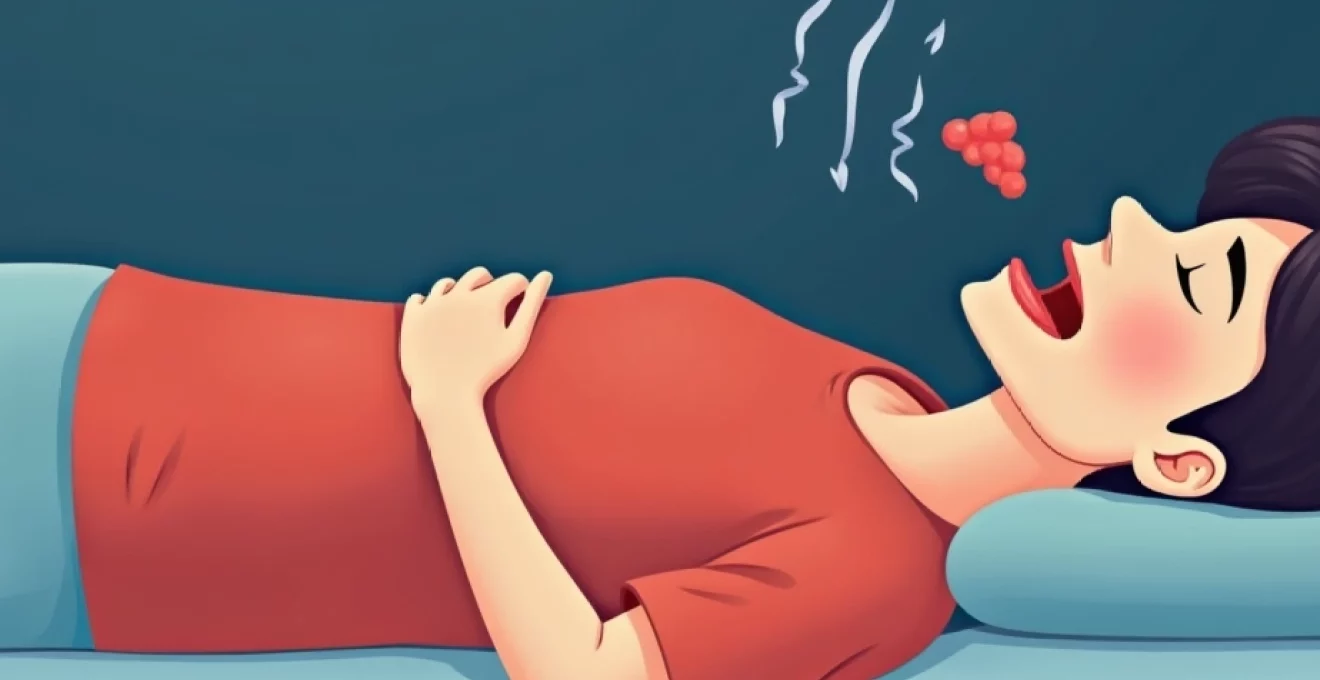
The unsettling sensation of gurgling sounds emanating from your throat when you settle into bed can transform peaceful moments into sources of concern and discomfort. This phenomenon, medically termed as supine throat gurgling , affects millions of individuals worldwide and represents a complex interplay of anatomical, physiological, and pathological factors. Unlike the occasional throat clearing that occurs during daily activities, these nocturnal sounds often persist and can significantly impact sleep quality and overall well-being.
Understanding the mechanisms behind throat gurgling when lying down requires exploring the intricate relationship between gravity, respiratory function, and digestive processes. When you transition from an upright to a horizontal position, your body undergoes numerous physiological adjustments that can predispose certain individuals to experiencing these troublesome symptoms. The causes range from benign anatomical variations to serious underlying medical conditions that require prompt attention and appropriate management.
Anatomical mechanisms behind supine gurgling sounds in the throat
The human throat represents a sophisticated anatomical structure where respiratory and digestive pathways intersect, creating a complex environment susceptible to various disruptions when body position changes. Understanding these anatomical foundations provides crucial insight into why gurgling sounds develop specifically during recumbent positioning.
Laryngeal cartilage positioning changes during recumbency
When you lie down, the laryngeal cartilages undergo subtle but significant positional changes that can contribute to abnormal sound production. The thyroid cartilage, which forms the prominent “Adam’s apple,” shifts posteriorly under gravitational influence, potentially narrowing the laryngeal vestibule. This anatomical repositioning can create turbulent airflow patterns that manifest as gurgling sounds, particularly in individuals with pre-existing laryngeal sensitivity or inflammation.
The cricoid cartilage, forming a complete ring around the airway, also experiences positional stress during supine positioning. This stress can affect the delicate balance between airway patency and vocal cord tension, creating conditions conducive to abnormal acoustic phenomena. Research indicates that individuals with naturally narrow laryngeal dimensions are particularly susceptible to these positional changes, experiencing more pronounced gurgling sounds when lying down.
Epiglottis function alterations in horizontal position
The epiglottis serves as a critical protective structure, preventing aspiration during swallowing while allowing unimpeded breathing. In supine positioning, gravitational forces can cause the epiglottis to assume a more horizontal orientation, potentially creating partial airway obstruction or altered airflow dynamics. This positional change can result in vibrations that produce characteristic gurgling sounds, particularly during inspiration.
Furthermore, epiglottic inflammation or swelling can exacerbate these positional effects, creating more pronounced acoustic disturbances when lying down. The horizontal position may also affect the epiglottis’s ability to clear secretions effectively, leading to accumulation of mucus or saliva that contributes to gurgling sounds during breathing.
Pharyngeal muscle relaxation and airway narrowing
The pharyngeal muscles undergo natural relaxation during rest periods, particularly when transitioning to sleep. This muscular relaxation can lead to pharyngeal narrowing, creating conditions where normal breathing patterns produce abnormal sounds. The superior, middle, and inferior pharyngeal constrictors work in coordination to maintain airway patency, but their relaxation during supine positioning can compromise this function.
Individuals with naturally weaker pharyngeal muscle tone may experience more significant narrowing when lying down, resulting in increased susceptibility to gurgling sounds. This phenomenon becomes particularly pronounced in older adults, where age-related muscle weakening compounds the effects of positional changes on pharyngeal function.
Gravitational effects on upper respiratory tract secretions
Gravity plays a fundamental role in secretion management within the upper respiratory tract. During upright positioning, gravitational forces assist in natural secretion drainage through the nasal passages and throat. However, when lying down, these gravitational advantages are lost, potentially leading to secretion accumulation in the pharyngeal regions.
The pooling of respiratory secretions in dependent portions of the throat can create ideal conditions for gurgling sound production during breathing. This effect is particularly pronounced in individuals with increased mucus production due to allergies, infections, or chronic respiratory conditions. The inability to clear these secretions effectively while lying down perpetuates the cycle of gurgling sound production throughout the night.
Gastroesophageal reflux disease as primary aetiology
Gastroesophageal reflux disease stands as one of the most prevalent underlying causes of throat gurgling when lying down. This condition involves the inappropriate relaxation of the lower oesophageal sphincter, allowing gastric contents to travel retrograde into the oesophagus and potentially reach the throat. The supine position significantly exacerbates this process by eliminating gravitational assistance in maintaining gastric contents within the stomach.
Lower oesophageal sphincter dysfunction in supine position
The lower oesophageal sphincter functions as a critical barrier between the stomach and oesophagus, maintaining appropriate pressure gradients to prevent reflux. When you assume a horizontal position, this sphincter loses the gravitational advantage that assists in its closure during upright positioning. Individuals with compromised sphincter function experience more frequent and severe reflux episodes when lying down, often resulting in gurgling sounds as gastric contents interact with throat structures.
Factors contributing to sphincter dysfunction include dietary choices, medications, and anatomical abnormalities. Foods high in fat content, caffeine, alcohol, and chocolate can significantly impair sphincter function, making individuals more susceptible to reflux when lying down. Additionally, certain medications, particularly calcium channel blockers and nitrates, can cause sphincter relaxation that becomes more problematic in supine positioning.
Acid regurgitation and laryngopharyngeal reflux mechanisms
Laryngopharyngeal reflux represents a distinct clinical entity where gastric contents reach the larynx and pharynx, causing direct tissue irritation and inflammation. Unlike typical gastroesophageal reflux, which primarily affects the lower oesophagus, laryngopharyngeal reflux can occur with minimal oesophageal symptoms, making it a particularly insidious cause of throat gurgling when lying down.
The mechanism involves gastric acid and pepsin travelling through the entire length of the oesophagus to reach the upper airway structures. These substances cause significant inflammation of the laryngeal and pharyngeal tissues, leading to swelling, increased secretion production, and altered tissue acoustics. The resulting inflammatory changes create ideal conditions for gurgling sound production, particularly during the prolonged recumbent periods associated with sleep.
Research demonstrates that over 50% of individuals experiencing chronic hoarseness have underlying laryngopharyngeal reflux, with many reporting symptom exacerbation when lying down.
Pepsin-induced vocal cord oedema and inflammation
Pepsin, the proteolytic enzyme found in gastric juice, plays a particularly destructive role in laryngopharyngeal reflux. Unlike hydrochloric acid, which can be neutralized by buffering mechanisms, pepsin remains active in the alkaline environment of the throat, continuing its tissue-damaging effects long after the initial reflux episode. This persistent enzymatic activity leads to chronic vocal cord oedema and inflammation that contributes significantly to gurgling sounds when lying down.
The inflammatory response triggered by pepsin exposure results in increased vascular permeability, tissue swelling, and altered vocal cord vibration patterns. These changes not only produce gurgling sounds but can also lead to voice changes, chronic cough, and throat clearing behaviours. The horizontal position during sleep provides optimal conditions for prolonged pepsin contact with laryngeal tissues, exacerbating these inflammatory processes.
Hiatal hernia complications during recumbency
Hiatal hernia represents a significant anatomical factor that predisposes individuals to reflux-related throat gurgling when lying down. This condition involves the protrusion of the stomach through the diaphragmatic hiatus into the thoracic cavity, compromising the natural anti-reflux mechanisms. During supine positioning, the anatomical distortion caused by hiatal hernia becomes more pronounced, leading to increased reflux frequency and severity.
The presence of a hiatal hernia disrupts the normal pressure relationships between the abdomen and thorax, making the lower oesophageal sphincter less effective in preventing reflux. Additionally, the herniated stomach portion can act as a reservoir for gastric contents that readily reflux when gravitational positioning changes occur. This mechanism explains why individuals with hiatal hernia often experience more severe throat gurgling symptoms when lying down compared to those with intact diaphragmatic anatomy.
Respiratory pathologies contributing to nocturnal throat gurgling
Various respiratory conditions can manifest as throat gurgling when lying down, representing underlying pathological processes that affect normal breathing patterns and secretion management. These conditions often become more symptomatic during recumbent positioning due to altered respiratory mechanics and impaired clearance mechanisms.
Chronic obstructive pulmonary disease exacerbations
Chronic obstructive pulmonary disease significantly impacts respiratory function, often leading to increased secretion production and impaired clearance mechanisms. When individuals with COPD assume supine positioning, the combination of reduced lung expansion and gravitational effects on secretions can result in prominent gurgling sounds emanating from the throat region. The chronic inflammation associated with COPD leads to hyperplasia of mucus-producing cells, resulting in excessive secretion production that becomes problematic when lying down.
The altered breathing mechanics in COPD patients during recumbency can create turbulent airflow patterns that interact with accumulated secretions to produce characteristic gurgling sounds. Additionally, the reduced expiratory flow rates common in COPD compromise the ability to clear secretions effectively, leading to prolonged symptom duration when lying down. This creates a cycle where secretion accumulation perpetuates gurgling sounds throughout the night, often disrupting sleep quality.
Bronchiectasis-related secretion accumulation
Bronchiectasis involves abnormal widening and thickening of the airways, resulting in impaired secretion clearance and chronic bacterial colonization. The damaged ciliary function and altered airway architecture characteristic of bronchiectasis create ideal conditions for excessive secretion production that becomes particularly problematic when lying down. The gravitational pooling of these infected secretions in dependent lung regions can lead to retrograde movement toward the upper airways, manifesting as throat gurgling.
The inflammatory nature of bronchiectasis secretions, often containing bacterial products and inflammatory mediators, can cause additional throat irritation when they reach the upper airway structures. This irritation can perpetuate the cycle of secretion production and contribute to the persistence of gurgling sounds during recumbent positioning. The viscous nature of bronchiectatic secretions makes them particularly difficult to clear when gravitational assistance is absent.
Sleep apnoea syndrome and upper airway obstruction
Sleep apnoea syndrome represents a significant cause of throat gurgling when lying down, involving repetitive episodes of upper airway obstruction during sleep. The anatomical predisposition to airway collapse in susceptible individuals becomes more pronounced during recumbent positioning, leading to partial obstructions that can produce gurgling sounds even outside of frank apnoeic episodes.
The intermittent hypoxia associated with sleep apnoea can lead to chronic inflammation of upper airway tissues, resulting in tissue swelling and altered acoustic properties. This inflammatory response can perpetuate gurgling sounds even during periods of apparent airway patency. Additionally, the increased respiratory effort required to overcome upper airway resistance can create turbulent airflow patterns that contribute to abnormal sound production when lying down.
Post-nasal drip from chronic rhinosinusitis
Chronic rhinosinusitis represents a common yet often overlooked cause of throat gurgling when lying down. The persistent inflammation of nasal and sinus mucosa leads to increased secretion production that, under gravitational influence, drains posteriorly into the throat region. When lying down, this drainage pattern can become more pronounced, leading to secretion accumulation in the pharyngeal areas where gurgling sounds are produced.
The inflammatory mediators present in rhinosinusitis secretions can cause additional throat irritation, perpetuating local inflammation and contributing to abnormal tissue acoustics. The chronic nature of this condition means that individuals may experience persistent gurgling sounds when lying down, often mistaken for other conditions such as gastroesophageal reflux. The interaction between post-nasal drip and positioning changes creates a complex clinical picture that requires careful evaluation to identify the underlying cause.
Studies indicate that approximately 60% of individuals with chronic rhinosinusitis report symptom exacerbation when lying down, with throat gurgling being among the most commonly reported nocturnal symptoms.
Neurological disorders affecting swallowing coordination
Neurological conditions can significantly impact the coordinated muscle activity required for normal swallowing and airway protection, leading to throat gurgling when lying down. These disorders affect the complex neural pathways that control pharyngeal and laryngeal function, creating predisposition to secretion accumulation and abnormal sound production during recumbent positioning.
Stroke represents one of the most common neurological causes of swallowing dysfunction, with up to 65% of stroke patients experiencing some degree of dysphagia. The resulting impairment in pharyngeal muscle coordination can lead to secretion pooling in the throat region, particularly problematic when lying down due to lost gravitational clearance assistance. The weakness or paralysis of pharyngeal muscles compromises the ability to manage normal respiratory secretions, leading to accumulation that produces gurgling sounds during breathing.
Parkinson’s disease affects swallowing function through multiple mechanisms, including bradykinesia, rigidity, and tremor affecting the muscles involved in swallowing coordination. The progressive nature of this condition means that swallowing difficulties often worsen over time, with gurgling sounds when lying down becoming more prominent as the disease advances. The reduced amplitude of pharyngeal muscle contractions characteristic of Parkinson’s disease impairs secretion clearance, particularly during recumbent positioning when gravitational assistance is absent.
Multiple sclerosis can cause demyelination of neural pathways controlling swallowing function, leading to unpredictable episodes of dysphagia and associated throat gurgling when lying down. The relapsing-remitting nature of multiple sclerosis means that individuals may experience intermittent periods of worsening gurgling symptoms that correlate with disease exacerbations. The involvement of brainstem structures in multiple sclerosis can particularly affect the coordination required for safe swallowing and airway protection.
Myasthenia gravis affects neuromuscular transmission, leading to muscle weakness that becomes more pronounced with repetitive use. The pharyngeal and laryngeal muscles involved in swallowing and airway protection can be significantly affected, leading to progressive weakness throughout the day that becomes particularly problematic when lying down. The fluctuating nature of muscle weakness in myasthenia gravis means that gurgling symptoms may vary significantly based on factors such as medication timing, fatigue levels, and disease activity.
Diagnostic approaches for supine throat gurgling assessment
Accurate diagnosis of throat gurgling when lying down requires a comprehensive evaluation approach that considers the multifactorial nature of this symptom. The diagnostic process typically begins with a detailed history focusing on symptom timing, associated factors, and potential triggering events. Healthcare providers must carefully assess the relationship between positioning changes and symptom onset, as well as any associated symptoms that might suggest underlying pathological processes.
Physical examination should include thorough evaluation of the head and neck region, with particular attention to laryngeal palpation, cervical lymph node assessment, and evaluation of vocal quality. The presence of hoarseness, chronic cough, or throat clearing behaviours can provide important diagnostic clues regarding the underlying aetiology. Additionally, assessment of nasal patency and signs of chronic rhinosinusitis can help identify post-nasal drip as a contributing factor.
Flexible laryngoscopy represents a crucial diagnostic tool for evaluating throat gurgling when lying down, allowing direct visualisation of laryngeal and pharyngeal structures. This procedure can identify signs of inflammation, oedema, or anatomical abnormalities that might contribute to abnormal sound production. The presence of laryngeal erythema , posterior commissure hypertrophy, or vocal cord changes can suggest laryngopharyngeal reflux as an underlying cause.
pH monitoring studies, including 24-hour ambulatory pH testing and multichannel intraluminal impedance monitoring, can provide objective evidence of gastroesophageal reflux and its relationship to symptom occurrence. These studies can particularly help identify nocturnal reflux episodes that might correlate with throat gurgling symptoms when lying down. The ability to correlate symptom timing with
objective reflux measurements creates valuable diagnostic information that can guide targeted therapeutic interventions.
Sleep studies may be indicated in individuals with suspected sleep-disordered breathing contributing to throat gurgling when lying down. Polysomnography can identify episodes of upper airway obstruction, sleep apnoea events, and associated respiratory disturbances that might explain nocturnal gurgling symptoms. The correlation between respiratory events and symptom occurrence can provide crucial diagnostic insights for appropriate treatment planning.
Swallowing studies, including videofluoroscopic swallow evaluation and fiberoptic endoscopic evaluation of swallowing, can assess swallowing coordination and identify neurological factors contributing to secretion accumulation. These studies can reveal subtle swallowing impairments that might not be apparent during routine clinical examination but significantly contribute to supine gurgling symptoms. The ability to evaluate swallowing function in different positions can provide particularly valuable information regarding positional effects on symptom production.
Computed tomography or magnetic resonance imaging of the neck and chest may be necessary to evaluate structural abnormalities, such as masses, lymphadenopathy, or anatomical variants that might contribute to throat gurgling when lying down. These imaging modalities can identify conditions such as thyroid enlargement, cervical spine abnormalities, or thoracic pathology that might affect upper airway function during recumbent positioning.
Therapeutic interventions and positional management strategies
Effective management of throat gurgling when lying down requires a comprehensive approach that addresses the underlying aetiology while providing symptomatic relief. The therapeutic strategy must be individualised based on the specific causative factors identified during the diagnostic evaluation, with careful consideration of patient preferences, comorbidities, and lifestyle factors that might influence treatment success.
Positional therapy represents one of the most immediate and accessible interventions for managing throat gurgling when lying down. Elevating the head of the bed by 6-8 inches can significantly reduce reflux episodes and improve secretion drainage through gravitational assistance. This simple intervention can provide substantial symptom improvement, particularly for individuals with gastroesophageal reflux disease or those experiencing secretion accumulation during recumbent positioning.
For individuals with gastroesophageal reflux-related throat gurgling, proton pump inhibitors represent the cornerstone of medical therapy. Medications such as omeprazole, lansoprazole, or esomeprazole can effectively reduce gastric acid production, minimising the irritant effects of refluxed material on upper airway structures. The timing of medication administration is crucial, with most patients benefiting from twice-daily dosing to provide optimal acid suppression during both daytime and nocturnal periods.
Clinical studies demonstrate that appropriate proton pump inhibitor therapy can reduce laryngopharyngeal reflux symptoms by up to 70% within 8-12 weeks of treatment initiation.
Dietary modifications play a crucial role in managing reflux-related throat gurgling when lying down. Avoiding trigger foods such as caffeine, alcohol, chocolate, spicy foods, and acidic beverages can significantly reduce reflux episodes. Additionally, implementing appropriate meal timing, with the last meal consumed at least 3-4 hours before bedtime, can minimise nocturnal reflux events that contribute to throat gurgling symptoms.
Weight management strategies are particularly important for overweight individuals experiencing throat gurgling when lying down, as excess weight can increase intra-abdominal pressure and promote gastroesophageal reflux. Even modest weight reduction of 5-10% can provide significant symptom improvement and reduce the frequency of nocturnal gurgling episodes.
For individuals with respiratory pathologies contributing to throat gurgling, targeted bronchial hygiene techniques can provide substantial benefit. Airway clearance methods such as controlled coughing, postural drainage, and the use of oscillatory positive expiratory pressure devices can help mobilise secretions and reduce accumulation that leads to gurgling sounds when lying down. The timing of these interventions is crucial, with optimal benefit achieved when performed shortly before bedtime.
Humidification therapy can address environmental factors that contribute to throat gurgling when lying down. The use of bedroom humidifiers can prevent excessive drying of respiratory secretions, making them easier to clear naturally and reducing the viscosity that contributes to abnormal sound production. Maintaining indoor humidity levels between 40-60% can provide optimal benefit without promoting excessive moisture that might encourage microbial growth.
Speech therapy interventions may benefit individuals with neurological conditions affecting swallowing coordination. Swallowing rehabilitation techniques, including strengthening exercises for pharyngeal muscles and coordination training, can improve secretion management and reduce throat gurgling when lying down. These interventions require consistent practice and professional guidance to achieve optimal results.
For cases involving chronic rhinosinusitis with post-nasal drip, topical nasal corticosteroids represent first-line therapy. Medications such as fluticasone or mometasone can reduce sinonasal inflammation and decrease excessive secretion production that contributes to throat gurgling during recumbent positioning. Nasal saline irrigation can provide additional benefit by mechanically clearing secretions and inflammatory mediators from the nasal passages.
Surgical interventions may be considered for individuals with specific anatomical abnormalities contributing to throat gurgling when lying down. Procedures such as fundoplication for severe gastroesophageal reflux, functional endoscopic sinus surgery for chronic rhinosinusitis, or upper airway surgery for sleep-disordered breathing may provide definitive treatment for selected patients who fail to respond to conservative management approaches.
The success of therapeutic interventions for throat gurgling when lying down often depends on patient adherence to treatment recommendations and the implementation of appropriate lifestyle modifications. Regular follow-up with healthcare providers allows for treatment optimisation and the identification of additional interventions that might be beneficial. Many patients experience significant symptom improvement within 4-8 weeks of initiating appropriate therapy, though some conditions may require longer treatment periods to achieve optimal results.