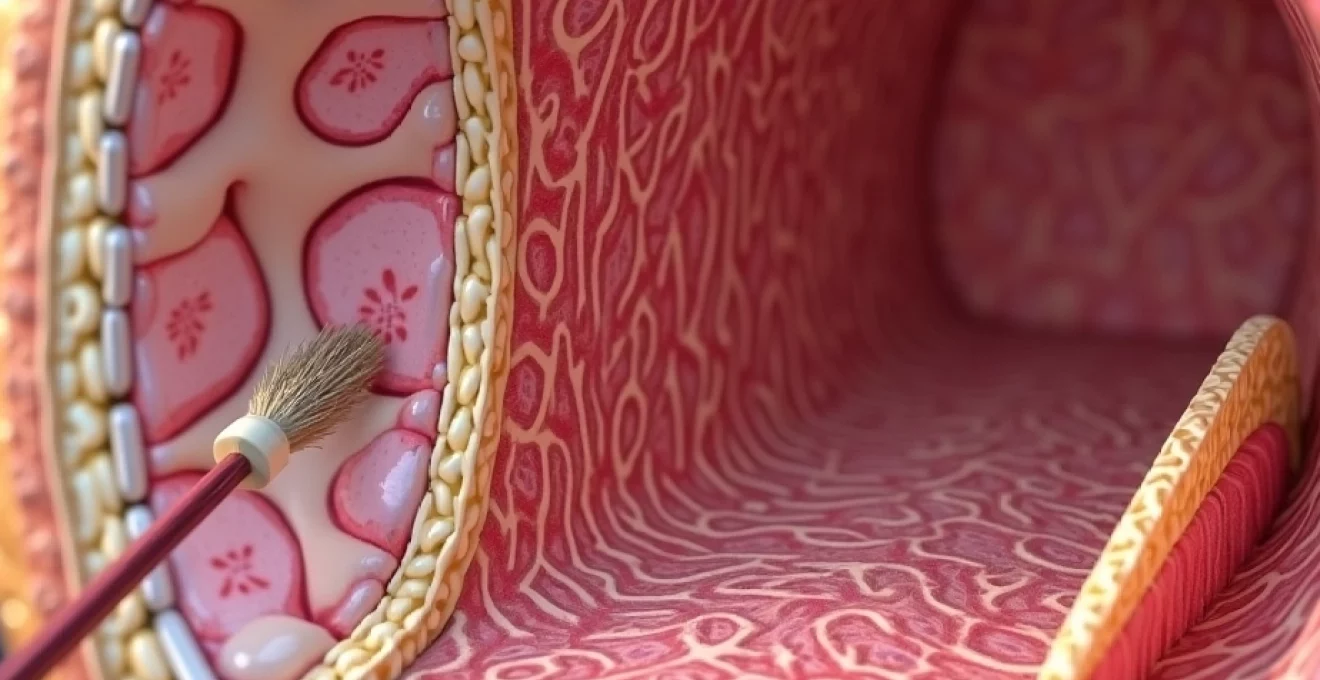
Mucosal thickening within the paranasal sinuses represents one of the most frequently encountered radiological findings in contemporary medical imaging, affecting millions of patients worldwide. This phenomenon occurs when the delicate mucosal lining that normally measures just 1-2 millimetres in thickness begins to swell and thicken due to various pathological processes. What makes this condition particularly intriguing is that up to 49% of the general population may demonstrate some degree of incidental mucosal thickening on magnetic resonance imaging, yet many remain completely asymptomatic. Understanding the complex interplay between anatomical structure, inflammatory processes, and clinical manifestations becomes crucial for healthcare professionals navigating the diagnostic and therapeutic challenges presented by this common yet often misunderstood condition.
Anatomical structure and physiological function of paranasal sinus mucosa
Ciliated pseudostratified columnar epithelium characteristics
The paranasal sinus mucosa comprises a sophisticated cellular architecture dominated by ciliated pseudostratified columnar epithelium, which forms the first line of defence against environmental pathogens and allergens. This epithelial layer contains approximately 200-300 cilia per cell, each beating at a frequency of 1000-1500 beats per minute in a coordinated metachronal wave pattern. The epithelial cells demonstrate remarkable regenerative capacity, with complete turnover occurring every 10-14 days under normal physiological conditions.
The pseudostratified arrangement creates an illusion of multiple cell layers whilst maintaining a single-layer structure, maximising surface area for mucociliary clearance. Tight junctions between adjacent epithelial cells maintain barrier function, preventing bacterial translocation whilst allowing selective permeability for essential nutrients and antimicrobial peptides. When inflammation occurs, these tight junctions become compromised, leading to increased vascular permeability and subsequent mucosal thickening.
Goblet cell distribution and mucin secretion patterns
Goblet cells constitute approximately 15-20% of the total epithelial cell population within healthy paranasal sinuses, though this proportion varies significantly between different anatomical regions. The frontal and sphenoid sinuses typically contain fewer goblet cells compared to the maxillary and ethmoid air cells, reflecting functional adaptations to local environmental challenges. These specialised cells produce mucins MUC5AC and MUC5B, which form the gel-like component of the protective mucus blanket.
Under inflammatory conditions, goblet cell hyperplasia occurs rapidly, with cell numbers increasing by 300-400% within 48-72 hours of initial insult. This hyperplastic response contributes significantly to mucosal thickening, as enlarged goblet cells and increased mucin production create substantial volume expansion within the confined sinus cavities. The altered mucin composition during inflammation also affects ciliary function, creating a vicious cycle of impaired clearance and progressive mucosal swelling.
Lamina propria vascular architecture and innervation
The lamina propria beneath the epithelial layer contains an intricate network of fenestrated capillaries, venous sinusoids, and lymphatic vessels that respond dynamically to inflammatory mediators. This vascular architecture demonstrates remarkable plasticity, with vessel density increasing by 40-60% during chronic inflammatory states. The autonomic innervation, predominantly from the sphenopalatine ganglion, modulates both vascular tone and glandular secretion through parasympathetic and sympathetic pathways.
Specialised arteriovenous anastomoses within the lamina propria function as erectile tissue, similar to nasal turbinates, allowing rapid volume changes in response to various stimuli. During inflammatory episodes, vasodilation and increased capillary permeability lead to tissue oedema, which constitutes the primary mechanism of mucosal thickening. The rich lymphatic network normally prevents excessive fluid accumulation, but becomes overwhelmed during severe inflammatory responses.
Mucociliary clearance mechanism and transport dynamics
The mucociliary escalator represents an elegant biological transport system, moving mucus at velocities of 4-20 millimetres per minute depending upon anatomical location and physiological state. This clearance mechanism relies upon the coordinated interaction between ciliary beating patterns and the rheological properties of the overlying mucus layer. The dual-phase mucus system comprises a periciliary sol layer that allows free ciliary movement and a superficial gel layer that traps particulates and pathogens.
Disruption of mucociliary clearance frequently precedes and accompanies mucosal thickening, creating a pathological cycle where impaired drainage promotes bacterial colonisation and further inflammation. Ciliary dyskinesia , whether primary or secondary to inflammation, significantly impacts clearance rates and contributes to the chronicity of sinonasal disease. Modern research demonstrates that restoring normal ciliary function often correlates with resolution of mucosal thickening, highlighting the fundamental importance of this transport mechanism.
Pathophysiology of mucosal thickening in rhinosinusitis
Inflammatory cascade activation and cytokine release
The initiation of mucosal thickening typically begins with exposure to infectious agents, allergens, or environmental irritants that trigger pattern recognition receptors on epithelial cells and resident immune cells. This recognition activates nuclear factor-kappa B (NF-κB) signalling pathways, leading to rapid transcription of pro-inflammatory genes and subsequent cytokine release. Key mediators including interleukin-1β (IL-1β), tumour necrosis factor-α (TNF-α), and interferon-γ (IFN-γ) orchestrate the early inflammatory response within minutes to hours of initial exposure.
The cytokine milieu determines both the intensity and character of the subsequent inflammatory response, with different patterns emerging in acute versus chronic disease states. Interleukin-4 and IL-13 predominate in allergic rhinosinusitis, promoting eosinophil recruitment and mucus hypersecretion, whilst IL-17 and interferon-γ characterise neutrophil-dominant responses typical of bacterial infections. This cytokine-driven inflammation directly contributes to mucosal thickening through vasodilation, increased vascular permeability, and cellular infiltration.
Oedematous changes and basement membrane alterations
Oedema formation represents the most immediate and reversible component of mucosal thickening, resulting from increased hydrostatic pressure and compromised endothelial barrier function. The normal basement membrane, measuring 50-80 nanometres in thickness, undergoes significant structural changes during inflammation, with deposition of additional collagen types and altered proteoglycan composition. These modifications increase membrane permeability whilst paradoxically thickening the barrier to 200-300 nanometres in chronic inflammatory states.
Matrix metalloproteinases (MMPs), particularly MMP-2 and MMP-9, play crucial roles in basement membrane remodelling and contribute to the persistence of mucosal thickening. The balance between MMP activity and tissue inhibitor of metalloproteinase (TIMP) expression determines whether inflammatory changes resolve completely or progress to chronic fibrotic thickening.
Understanding these molecular mechanisms provides insight into why some patients experience rapid resolution of symptoms whilst others develop persistent mucosal abnormalities despite appropriate treatment.
Eosinophilic infiltration in chronic rhinosinusitis with nasal polyps
Eosinophilic chronic rhinosinusitis represents a distinct inflammatory phenotype characterised by dense tissue infiltration with activated eosinophils, often exceeding 10 cells per high-power field on histological examination. These cells release cytotoxic proteins including major basic protein and eosinophil cationic protein, which damage epithelial cells and perpetuate inflammatory cascades. The resulting tissue damage and repair cycles contribute significantly to progressive mucosal thickening and polyp formation.
Eosinophil-derived mediators also stimulate fibroblast proliferation and collagen synthesis, leading to subepithelial fibrosis that becomes increasingly prominent in long-standing disease. The characteristic basement membrane thickening observed in eosinophilic chronic rhinosinusitis can reach 15-20 micrometres, compared to 2-3 micrometres in healthy tissue. This structural remodelling contributes to the persistence of mucosal abnormalities and reduced responsiveness to medical therapy.
Neutrophilic predominance in acute bacterial sinusitis
Acute bacterial sinusitis demonstrates a markedly different inflammatory pattern, with rapid neutrophil recruitment dominating the cellular infiltrate within 6-12 hours of bacterial invasion. Neutrophils release elastase, myeloperoxidase, and other proteolytic enzymes that contribute to tissue damage and mucosal thickening through direct cytotoxic effects. The formation of neutrophil extracellular traps (NETs) provides antimicrobial defence but simultaneously contributes to mucus viscosity and impaired ciliary clearance.
The neutrophil-dominant response typically produces more rapid but potentially reversible mucosal changes compared to eosinophilic inflammation. However, recurrent episodes of acute bacterial sinusitis can lead to cumulative tissue damage and progressive mucosal thickening through repeated cycles of inflammation and repair. Bacterial biofilm formation on damaged mucosa perpetuates chronic inflammatory states and complicates therapeutic interventions.
Radiological assessment methods for mucosal thickening evaluation
Computed tomography protocol optimisation and slice thickness parameters
High-resolution computed tomography remains the gold standard for evaluating sinonasal anatomy and pathology, with optimal protocols utilising slice thicknesses of 1-3 millimetres and bone algorithm reconstruction. Modern multidetector CT scanners enable isotropic voxel acquisition, allowing high-quality multiplanar reconstructions that enhance diagnostic accuracy for subtle mucosal abnormalities. Coronal plane imaging proves particularly valuable for surgical planning, as it corresponds closely to the endoscopic surgeon’s anatomical perspective.
Radiation dose optimisation has become increasingly important, with low-dose protocols demonstrating comparable diagnostic accuracy for mucosal thickening assessment whilst reducing patient exposure by 40-60%. The contrast resolution of CT allows differentiation between various soft tissue densities, enabling distinction between mucosal thickening, retained secretions, and polypoid tissue. Hounsfield unit measurements provide quantitative assessment of tissue density, with normal mucosa measuring 20-40 HU compared to 10-25 HU for mucoid secretions.
Magnetic resonance imaging T1 and T2-Weighted sequence applications
Magnetic resonance imaging offers superior soft tissue contrast compared to CT, making it particularly valuable for characterising the nature of mucosal thickening and associated complications. T2-weighted sequences demonstrate high sensitivity for detecting even minimal mucosal abnormalities, with thickened mucosa appearing hyperintense compared to normal air-filled sinuses. However, this high sensitivity can lead to overcalling of clinically insignificant findings, as up to 40% of asymptomatic individuals demonstrate mucosal abnormalities on MRI.
T1-weighted imaging proves essential for evaluating complications such as orbital or intracranial extension, whilst fat-suppressed sequences enhance detection of inflammatory changes. The signal characteristics on different pulse sequences help differentiate between various pathological processes, with acute inflammation demonstrating high T2 signal intensity whilst chronic fibrotic changes appear hypointense.
Recent studies suggest that functional MRI techniques measuring tissue perfusion may provide additional insights into the inflammatory activity underlying mucosal thickening.
Lund-mackay scoring system for quantitative assessment
The Lund-Mackay scoring system provides standardised quantitative assessment of sinonasal disease burden, evaluating each anatomical region on a scale from 0 (no abnormality) to 2 (complete opacification). This systematic approach enables objective comparison between patients and longitudinal monitoring of disease progression or treatment response. The ostiomeatal complex receives particular attention in this scoring system, reflecting its crucial role in sinus drainage and ventilation.
Recent modifications to the original Lund-Mackay system have improved inter-observer reliability and clinical correlation, with studies demonstrating that scores exceeding 13 correlate with significant symptom burden and favourable surgical outcomes. However, the relationship between radiological severity and clinical symptoms remains complex, with some patients demonstrating extensive mucosal thickening yet minimal symptoms. Computer-aided detection algorithms are being developed to automate Lund-Mackay scoring and reduce inter-observer variability.
Cone beam CT advantages in maxillofacial imaging
Cone beam computed tomography has emerged as a valuable imaging modality for sinonasal evaluation, offering high spatial resolution with reduced radiation exposure compared to conventional CT. The isotropic voxel size of 0.1-0.4 millimetres enables detailed visualisation of fine anatomical structures and subtle mucosal changes that might be missed on standard CT protocols. This enhanced resolution proves particularly beneficial for evaluating the complex anatomy of the ethmoid air cells and identifying anatomical variants that predispose to recurrent sinusitis.
The ability to perform CBCT imaging in an office-based setting facilitates point-of-care diagnosis and treatment planning, though image quality limitations in the setting of extensive mucosal disease may necessitate conventional CT or MRI. The lower radiation dose of CBCT makes it particularly attractive for pediatric imaging and serial follow-up examinations. Recent developments in metal artifact reduction algorithms have improved image quality in patients with dental hardware, expanding the clinical applications of this technology.
Clinical correlation between mucosal thickness and symptom severity
The relationship between radiological mucosal thickening and clinical symptom severity demonstrates surprising complexity, challenging traditional assumptions about imaging-symptom correlation. Research indicates that mucosal thickening measuring less than 4 millimetres rarely correlates with clinically significant inflammation, with negative predictive values reaching 77% in some studies. This finding has profound implications for clinical practice, as it suggests that minor radiological abnormalities should not automatically trigger aggressive therapeutic interventions.
Patient-reported outcome measures, particularly the Sino-Nasal Outcome Test-22 (SNOT-22), show weak correlation with objective radiological findings in many cases. This disconnect may result from individual variations in pain perception, adaptation to chronic symptoms, and the multifactorial nature of sinonasal symptomatology. Psychological factors , sleep quality, and comorbid conditions significantly influence symptom perception, often overshadowing the direct impact of mucosal abnormalities.
Endoscopic examination provides a bridge between radiological findings and clinical symptoms, allowing direct visualisation of mucosal inflammation and its functional consequences. The Modified Lund-Mackay Endoscopic Score correlates more closely with patient-reported outcomes than radiological scoring systems, emphasising the importance of clinical examination in patient evaluation. However, even endoscopic findings must be interpreted within the broader clinical context, as asymptomatic individuals may demonstrate significant mucosal abnormalities on examination.
The temporal relationship between mucosal thickening development and symptom onset varies considerably between patients and disease subtypes. Acute inflammatory processes typically produce rapid symptom development that correlates well with imaging findings, whilst chronic conditions may demonstrate substantial mucosal changes with relatively modest symptoms.
Understanding these patterns helps clinicians develop more nuanced treatment approaches that prioritise functional improvement over purely radiological normalisation.
Therapeutic interventions for pathological mucosal thickening
Medical management of pathological mucosal thickening employs a multimodal approach targeting different aspects of the inflammatory cascade and its consequences. Topical corticosteroids remain the cornerstone of therapy, with modern formulations demonstrating excellent mucosal penetration and minimal systemic absorption. These medications address multiple pathophysiological mechanisms simultaneously, reducing inflammatory cell infiltration, decreasing vascular permeability, and restoring normal epithelial function.
Saline irrigation techniques have gained widespread acceptance as both therapeutic and preventive interventions, with various delivery systems ranging from simple squeeze bottles to powered irrigation devices. The mechanical action of saline irrigation removes inflammatory mediators, allergens, and bacterial debris whilst improving mucociliary clearance. Hypertonic saline solutions may provide additional benefits through osmotic effects that reduce mucosal oedema, though patient tolerance varies significantly.
Biological therapies represent an emerging frontier in the treatment of severe chronic rhinosinusitis with
persistent nasal polyposis. Monoclonal antibodies targeting specific inflammatory pathways, such as dupilumab (anti-IL-4/IL-13) and mepolizumab (anti-IL-5), have demonstrated remarkable efficacy in reducing mucosal thickening and polyp burden. These targeted therapies address the underlying type 2 inflammatory response that drives eosinophilic chronic rhinosinusitis, often achieving dramatic improvements where conventional treatments have failed.
Systemic corticosteroids provide rapid reduction in mucosal thickening during acute exacerbations, though their use must be balanced against potential side effects and limited long-term efficacy. Short courses of oral prednisolone can achieve 50-70% reduction in mucosal volume within 7-10 days, providing valuable bridging therapy whilst other interventions take effect. Antibiotic therapy targeting specific bacterial pathogens proves essential in culture-positive acute sinusitis, though the increasing prevalence of biofilm-associated infections complicates treatment selection and duration.
Functional endoscopic sinus surgery (FESS) remains the definitive intervention for medically refractory mucosal thickening, with modern techniques achieving success rates exceeding 85% in appropriately selected patients. Surgical goals focus on restoring physiological drainage patterns rather than complete mucosal normalisation, recognising that some degree of residual thickening may persist without clinical significance. The concept of “image-guided surgery” has revolutionised surgical precision, enabling targeted intervention whilst preserving healthy tissue and minimising complications.
Post-operative care protocols emphasising aggressive medical management and regular endoscopic surveillance have significantly improved long-term outcomes following surgical intervention. The integration of topical therapies, saline irrigation, and biological agents in the post-operative period helps maintain surgical gains and prevent recurrent mucosal thickening.
The evolution towards personalised medicine in rhinosinusitis management recognises that optimal therapeutic strategies must be tailored to individual inflammatory phenotypes and endotypes rather than applying generic treatment protocols.
Differential diagnosis of paranasal sinus mucosal abnormalities
Distinguishing between different causes of mucosal thickening requires careful consideration of clinical presentation, radiological characteristics, and patient demographics. Infectious aetiologies typically present with acute onset symptoms, purulent drainage, and localised facial pain, whilst allergic conditions demonstrate seasonal patterns and associated respiratory symptoms. The radiological appearance provides valuable diagnostic clues, with bacterial infections often showing air-fluid levels and complete sinus opacification, compared to the more diffuse mucosal changes characteristic of allergic disease.
Fungal sinusitis presents unique diagnostic challenges, particularly in distinguishing between invasive and non-invasive forms. Allergic fungal sinusitis characteristically demonstrates high-signal intensity areas on T2-weighted MRI sequences, corresponding to inspissated secretions containing fungal elements and inflammatory debris. The presence of central hypointensity within hyperintense mucoid material creates a characteristic “cerebriform” or “convoluted pattern” that strongly suggests fungal aetiology.
Neoplastic processes must be considered in the differential diagnosis, particularly when mucosal thickening demonstrates unilateral distribution, bone erosion, or fails to respond to appropriate medical therapy. Sinonasal tumours can masquerade as chronic inflammatory disease, making tissue sampling essential in suspicious cases. The combination of clinical red flags, characteristic imaging features, and histopathological examination enables accurate differentiation between inflammatory and neoplastic conditions.
Granulomatous diseases including sarcoidosis, Wegener’s granulomatosis, and mycobacterial infections can produce mucosal thickening that mimics more common inflammatory conditions. These systemic disorders often demonstrate multiorgan involvement and characteristic laboratory abnormalities that aid in diagnosis. Eosinophilia, elevated inflammatory markers, and positive autoantibody tests provide valuable diagnostic information when interpreting ambiguous imaging findings.
Drug-induced mucosal changes represent an increasingly recognised cause of sinonasal symptoms, with medications such as angiotensin-converting enzyme inhibitors, beta-blockers, and topical decongestants potentially triggering or exacerbating mucosal inflammation. The temporal relationship between medication initiation and symptom onset often provides crucial diagnostic information, though the effects may be delayed by weeks or months.
Anatomical variants and developmental abnormalities can predispose to recurrent mucosal thickening through impaired drainage patterns. Concha bullosa, paradoxically curved middle turbinates, and Haller cells create mechanical obstruction that promotes secondary inflammatory changes. Recognition of these predisposing factors enables targeted surgical correction that addresses the underlying cause rather than merely treating the inflammatory consequences.
Environmental and occupational exposures increasingly contribute to chronic mucosal inflammation in industrialised societies. Chemical irritants, particulate matter, and allergens in workplace environments can produce patterns of mucosal thickening that correspond to exposure history and distribution. Detailed occupational and environmental history taking becomes essential when evaluating patients with unexplained or treatment-resistant sinonasal disease.
The differential diagnosis must also consider rare genetic conditions such as primary ciliary dyskinesia and cystic fibrosis, which produce characteristic patterns of sinonasal disease. These conditions typically present in childhood with recurrent respiratory infections and distinctive imaging features, though milder variants may not be diagnosed until adulthood. Genetic testing and specialised functional studies enable definitive diagnosis and guide appropriate therapeutic interventions.